
IF THIS SITE IS DOWN EMAIL SUPPORT@BLACKOPSHOSTING.COM
Leaderboard

Popular Content
Showing content with the highest reputation on 09/27/2022 in all areas
-
I'm sure they are just amazed at how stupid and inept we can be. That combined with their complete lack of patience 🤣2 points
-
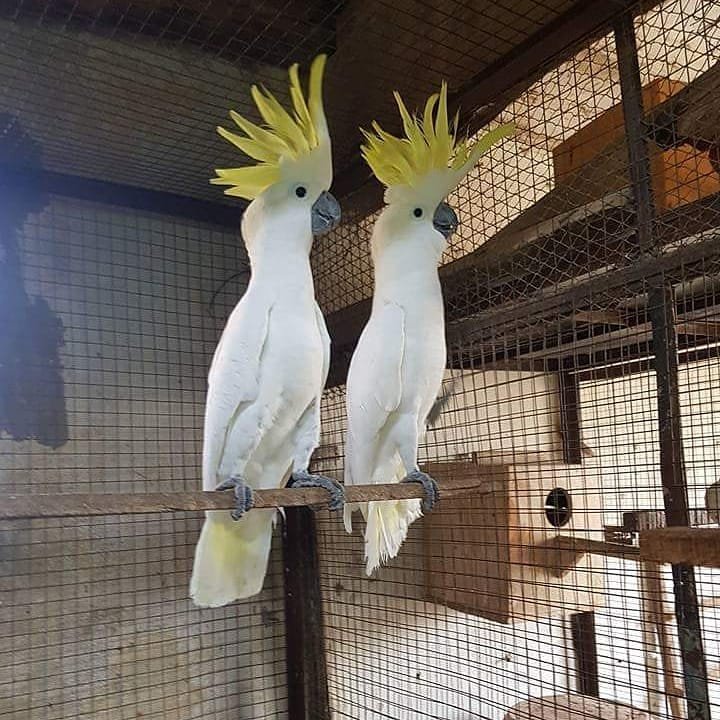
Sulphur-crested cockatoo The sulphur-crested cockatoo is one of the largest of the several species of beautiful white cockatoos. It is a different species than the lesser sulphur-crested cockatoo. Although spectacular in appearance, this huge, active parrot is brilliant, long-lived, and noisy; and it is very challenging to keep as a pet. This bird expects a lot from its owner and it is recommended only for experienced owners who are up to the task. For a motivated owner, the sulphur-crested is a once-in-a-lifetime pet. Breed Overview COMMON NAMES: Sulphur-crested cockatoo, greater sulphur-crested cockatoo SCIENTIFIC NAME: Cacatua galerita ADULT SIZE: The largest subspecies (C. g. galerita) can reach an adult size of about 20 inches, weighing nearly two pounds LIFE EXPECTANCY: Up to 80 years in captivity with proper care Origin and History Sulphur-crested cockatoos are native to eastern Australia, New Guinea, Indonesia, and New Zealand. Their preferred habitat is along the edges of tropical and subtropical rainforests. They are also a familiar sight in urban areas. In some parts of Australia, this bird is so plentiful that people consider it a nuisance. The Wild Bird Conservation Act prohibits the import of sulphur-crested cockatoos to the United States, so most pet birds now are captive-bred. There are four subspecies, hailing from different geographic locations with slightly different physical characteristics: Cacatua galerita triton: Called the Triton cockatoo, comes from New Guinea and the surrounding islands C. g. eleonora: Eleonora cockatoo, comes from some of the eastern Indonesian islands C. g. fitzroyi: Mathews cockatoo, comes from northern Australia C. g. galerita: Standard sulfur-crested cockatoo, comes from eastern Australia. This is the most common subspecies. The lesser sulphur-crested cockatoo looks similar to the (greater) sulphur-crested cockatoo, occupies a different geographic range, and is not a typical pet bird. Temperament Cockatoos are an affectionate species among the various types of parrots; the sulphur-crested is typical in this regard. You must be willing to devote the time and energy to form a strong bond with a bird. A sulphur-crested cockatoo loves to be handled but also needs enough alone time to learn self-sufficiency, which is no small feat. This bird is a more emotionally complicated pet species than other cockatoos and is prone to sudden, unpredictable movements that can be startling, although the intent is rarely aggressive. This demanding bird can become self-abusive and destructive if it does not get the attention it needs.1 They are considered one of the most intelligent parrots. They have the learning capacity of a 1- to 2-year-old human child and can learn to talk and do tricks. Young birds will be easiest to train and socialize. Speech and Vocalizations These birds are excellent mimics and can quickly learn to speak words and phrases. The sulphur-crested cockatoo also has a piercingly loud shriek. This species is not well-suited to apartment living as its noisiness can be considered a nuisance to close neighbors. Sulphur-Crested Cockatoo Colors and Markings Sulphur-crested cockatoos are primarily white with black beaks. They sport a beautiful crest of yellow feathers on top of their heads. It has a yellow wash on the underside of its wings. The sexes look similar, although the female can be distinguished at close range by its reddish-brown eye. The male's eyes are darker brown or black. This distinction does not become apparent until the bird has reached maturity, which varies between 3 to 5 years of age. Caring for the Sulphur-Crested Cockatoo Sulphur-crested cockatoos are large birds that need very spacious enclosures. At a minimum, the cage should have a footprint of about 40 inches by 40 inches and at least 5 feet tall. A bigger cage is better, and best of all is an aviary environment. The birds naturally emit a downy powder, which aids in keeping their wings and skin healthy. This powder may be problematic for some people with allergies.1 Bird bathing is strictly an individual preference. In the wild, some cockatoos enjoy standing in the rain while others avoid it. Common Health Issues The health issues affecting sulphur-crested cockatoos are similar to those for other cockatoos and parrots of the same size. This bird is especially prone to rebellious behavior problems if it does not get attention and adequate exercise and mental stimulation. They may start feather plucking and destructive chewing.1 To avoid these unwanted behaviors, owners must be diligent about providing their pets with plenty of toys and attention. Like other parrots, sulphur-crested cockatoos are prone to fatty tumors if their diets do not include enough fresh vegetables and fruit.2 This species is also susceptible to psittacine beak and feather disease (PBFD), a viral condition.3 Diet and Nutrition In the wild, sulphur-crested cockatoos feast on seeds, grain, and insects that they harvest from trees. In captivity, they need a varied diet that includes high-quality pellets and fresh fruits and vegetables. Experienced owners of sulphur-crested cockatoos take great care in preparing their birds' diets, as cockatoos can quickly suffer from the effects of poor nutrition.1 A well-formulated, high-quality parrot pellet should account for 75 percent of its dietary needs. The remaining 25 percent should be fresh fruits and vegetables. Start by offering your bird 1/4 cup of pellets and 1/4 cup of fruits daily. Increase the amount as needed. Nuts and seeds can be given sparingly as training treats. Exercise The sulphur-crested cockatoo is a highly active and lively bird that requires plenty of exercise to maintain proper health.1 Owners of sulphur-crested cockatoos should allow their pets a minimum of 3 to 4 hours of outside-the-cage playtime every day. Provide the bird plenty of space to climb, stretch, and flap its wings. Most cockatoo owners provide their birds with play stands or special perches for their exercise needs. Give your cockatoo plenty of interactive toys that can be chewed, grasped, and climbed. Cockatoos have one of the most powerful beaks in the parrot world, expect to give them durable toys. Birds get tired of the same toys every day, plan to rotate them in and out to keep your bird interested and distracted from unwanted behaviors like chewing on your wooden furniture.
 1 point
 -
Things have been going really well with Alfie for months. We went through a spell where Alfie didn't really tolerate me much any more and my confidence was knocked so I was super wary of him for a time. We have worked on that through lots of training and times spent together and I feel we now have a much better understanding and mutual respect of each other. On top of this- Alfie now flies to me to sit with me for loooaaads of head scritches - just like his does with my mum when we go visit my parents. Plus I can scritch his head through the cage bars again without worrying about him lunging at me. Buuut every so often I have to be reminded of who exactly is boss round here! 😂 Yesterday it was getting late so I wanted to put Alfie back in his cage so I could go to bed. He was sitting on a basket which is part of the cats' scratching tree (I should note: the cats are kept out of the way in the upper half of the house when Alfie is out of his cage). I offered my arm and asked Alfie to step up. He didn't move- but he didn't turn away or walk away from my arm. So I left it there, waited a moment and asked him to step up again. He doesn't always step up on my arm/hand but will usually always step up on a spare dowel perch I have kicking around. So I was debating about grabbing that instead of using my arm as that's usually more successful. Before I could move, Alfie decided I'd obviously pushed my luck, put one foot on my arm then grabbed my wrist as hard as get could. As he was half on/half off I just had to ride it out. He loosened off then grabbed again even harder. It hurt like heck but again I just had to ride it out cos he wasn't fully on my arm. He then let go and put the second foot on my arm. So I didn't say anything, moved over to his cage, waited for him to step up on to the perch in his cage then closed the door. Didn't say a word, just went about tidying up the lounge area. The little bugger sat there waiting patiently for his pine nuts that he normally gets for a good step up and for going back into his cage 😂 Needless to say, he did not get rewarded for that behaviour! Amazingly he didn't break the skin but I have quite a big welt on my wrist and it's very sore to touch. I haven't received a bite like that for a long time, so I almost forgot how painful it can be... to both the bite location and my ego!! 😂 It was my own fault- I should have removed the arm sooner and offered the perch instead. Apparently his lord highness Alfie prefers the perch! That's me told! 😁1 point